
Dr. Saumyadipta Pyne, PhD
Founder and President
Dr. Pyne has 25+ years of experience in research, teaching, entrepreneurship, providing strategic advice and leadership. His areas of research include computational statistics, machine learning, data fusion and disaggregation, models of population heterogeneity, spatial complexity, skew and mixture distributions, high-dimensional and big data analysis with applications in biomedical informatics, biostatistics, detection and prediction of rare events, dynamic and emergent phenomena, public and environmental health.
- Reconstructing the unknown transcriptomic trail of evolution in single cells (GRAIL)
- Predicting the future trajectories of aging phenotypes in individuals (DyViA-GAN)
- Forecasting neurodegenerative trends in personalized cognitive functions (MARGA)
- Modeling neurodegenerative phenotypic structures with circular functions (CIFU)
- Spatial functional regression modeling of tumor molecular landscape (SFINX)
Through his writings and presentations to Data Science and AI task forces, Dr. Pyne provides strategic inputs for policies and standards such as for benchmarking different characteristics of data. He served in key technical advisory groups including HHS AI Task Force (R&D and Public Health) and DST Big Data Initiative.
Over the past three decades, he has led and participated in many international collaborations, consortia and capacity-building projects. He has long-standing collaborations with researchers in several countries including Australia, Canada, India, the UK, etc.
Dr. Pyne has been honored with oration awards, international fellowships, chair and visiting professorships, public felicitation, memorial and keynote lectures. These include Ramalingaswami Fellowship of the Department of Biotechnology, India; and Senior Research Fellowship of the NIH, USA. In 2022, he was awarded the National Service Data Scholarship by NIH.
He served as the PC Mahalanobis Chair Professor and Head of Bioinformatics at the CR Rao Advanced Institute of Mathematics, Statistics and Computer Science. Formerly, he was the Scientific Director of the Public Health Dynamics Lab at the University of Pittsburgh. Dr. Pyne did his doctoral research at the Computer Science and Molecular Genetics Departments of SUNY Stony Brook, and the Stat-Math Unit of Indian Statistical Institute; and his postdoctoral research at the Broad Institute of MIT and Harvard University.
For years, he has worked at premier institutions such as MIT, Harvard Medical School, Indian Institute of Public Health, and University of Pittsburgh School of Public Health.
Dr. Pyne has published extensively in premier journals, and serves on the editorial boards of various international journals.

Dr. Meghana Ray, PhD, MBA
Co-Founder and Vice President
Dr. Ray is a Health Systems Strategist with 20+ years designing and executing mission-driven research agendas across government, academia, and nonprofits. She brings deep experience in translating complex multi-source evidence into actionable strategy for executive leaders and cross-functional teams; overseeing high-stakes portfolios, contractors, and collaborators; and delivering rapid-turnaround analyses that inform resource allocation, program strategy, and field learning. Dr. Ray brings a values-grounded approach centered on equity, accountability, and practical usefulness for decision-makers and partners.
An application of her work in the field of disaster research led to the development of a framework for managing and training pharmacists for disasters and emergencies. Post-pandemic, Dr. Ray published a book on Disaster and Emergency Preparedness by the American Pharmacists Association, and it was deemed to be the first book to comprehensively cover all aspects of preparedness, management, and recovery by pharmacy professionals.
Her long-standing work in global health encompasses projects conducted in Haiti, Honduras, and India. Along with colleagues, Dr. Ray conducted multiple workshops on Health Analytics and Disease Modeling, and other areas of Data Analytics in India. Her leadership at the American Public Health Association led to the development of a Pharmacy Special Interest Group (now a Section) in 2014 where she has served in various leadership roles. Currently, she serves as a Board Member on the Howard County Board of Health in Maryland, grant reviewer for multiple federal and state agencies, and as the Academic Editor of PLOS One.
Dr. Ray earned her Ph.D. in Health Policy from University of Illinois at Chicago, MBA from Illinois Institute of Technology, and BPharm from University of Mumbai, India. As Vice President of Health Analytics Network, Dr. Ray is building a consortium of interdisciplinary researchers and developing technological solutions to improve health outcomes.

Dr. Sumanta Ray, PhD
Senior Research Associate
Dr. Sumanta is an Associate Professor in the Department of Data Science at West Bengal National University of Juridical Sciences (WBNUJS), Kolkata. His research lies at the intersection of machine learning, network science, and computational biology, with a particular focus on single-cell genomics, graph neural networks, and integrative analysis of high-dimensional biomedical data. Over the years, Dr. Ray’s work has contributed to methodological advances in single-cell RNA-seq analysis, host–pathogen interaction modeling, disease module identification, and generative frameworks for biological data integration.
He has held academic and research positions in India and abroad, including postdoctoral research at Centrum Wiskunde & Informatica (CWI), the Netherlands, and a visiting academic appointment at Bielefeld University, Germany. Dr. Rau is a recipient of the ERCIM Alain Bensoussan Postdoctoral Fellowship and the DST-INSPIRE Fellowship, among other national and international recognitions. To date, he has published 50+ peer-reviewed research articles in journals such as PLoS Computational Biology, Nature Communications Biology, Briefings in Bioinformatics, and Artificial Intelligence in Medicine.
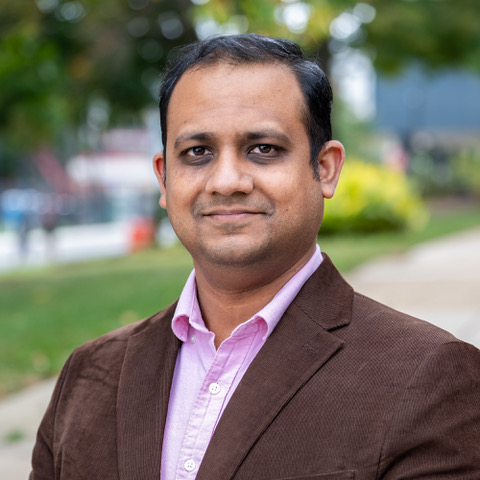
Dr. Deep Ray, PhD
Research Associate
Dr. Deep Ray is an Assistant Professor of Mathematics at the University of Maryland. He received his Ph.D. in Mathematics from the Tata Institute of Fundamental Research (India) in 2017. He subsequently held postdoctoral research positions at École Polytechnique Fédérale de Lausanne (Switzerland), Rice University, and the University of Southern California.
As an applied mathematician, Dr. Ray works at the interface of numerical analysis and scientific machine learning. He has developed novel deep learning–based algorithms to overcome computational bottlenecks in traditional numerical methods. His research has applications in computational fluid dynamics, PDE-constrained optimization, operator learning, and Bayesian inference, with particular emphasis on medical applications and wildfire spread modeling.
Dr. Ray is also a co-author of the textbook Deep Learning and Computational Physics, which is targeted toward an application-oriented audience across science and engineering disciplines.
Our collaborators:
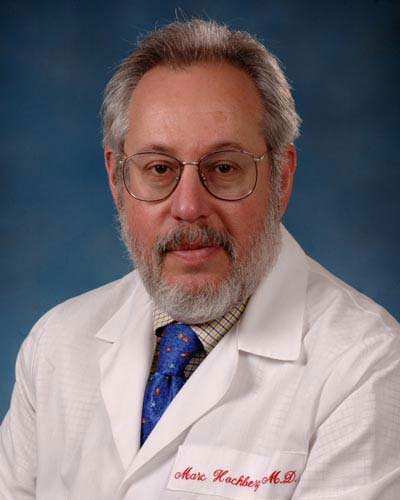
Dr. Marc Hochberg, M.D., MPH
Clinical collaborator
Dr. Hochberg’s research focused on the clinical epidemiology of musculoskeletal disorders, particularly osteoarthritis and osteoporosis. He was Principal Investigator (PI) of the Baltimore Clinical Center for the Osteoarthritis Initiative and the Study of Osteoporotic Fractures. He also was Co-PI of the Baltimore Hip Studies and Co-Director of the Pilot and Exploratory Studies Core of the University of Maryland Claude Pepper Older Americans Independence Center. His research was funded by the National Institutes of Health.
Dr. Hochberg received the Clinical Research Award from the Osteoarthritis Research Society International (OARSI) in 1999, was named one of only 50 “Postdoctoral Fellow Heroes” by the Arthritis Foundation in 2001, received the Mary Betty Stevens Clinical Research Award from the American College of Physicians (Maryland Chapter) in 2002, the Roger Demers Prize at the 42nd Laurentian Conference of Rheumatology in 2011, the Distinguished Clinical Investigator Award from the American College of Rheumatology (ACR) in 2012, the Lifetime Achievement Award from OARSI in 2013, the Arthur Modell Presidents Award from the Arthritis Foundation, Maryland Chapter in 2013 and the Distinguished Alumnus Award from both Franklin & Marshall College and The Johns Hopkins University in 2014. He was named a Master of both the American College of Physicians and the American College of Rheumatology in 2014. He was General Secretary and a member of the Board of Directors of OARSI, a member of the Board of Directors of both the ACR and the ACR Research and Education Foundation, President and a member of the Board of Directors of the U.S. Bone and Joint Initiative (USBJI) and Chair, Standing Committee on Epidemiology of the International League of Associations of Rheumatology.
He has published over 500 peer-reviewed articles and 60 book chapters, and is an editor of the textbooks “Rheumatology, 8th edition” (Mosby/Elsevier, 2023), “Epidemiology of the Rheumatic Diseases, 2nd edition” (Oxford University Press, 2001), and “Rheumatoid Arthritis” (Mosby/Elsevier, 2009). He is currently the Editor-in-Chief of Seminars in Arthritis and Rheumatism.